
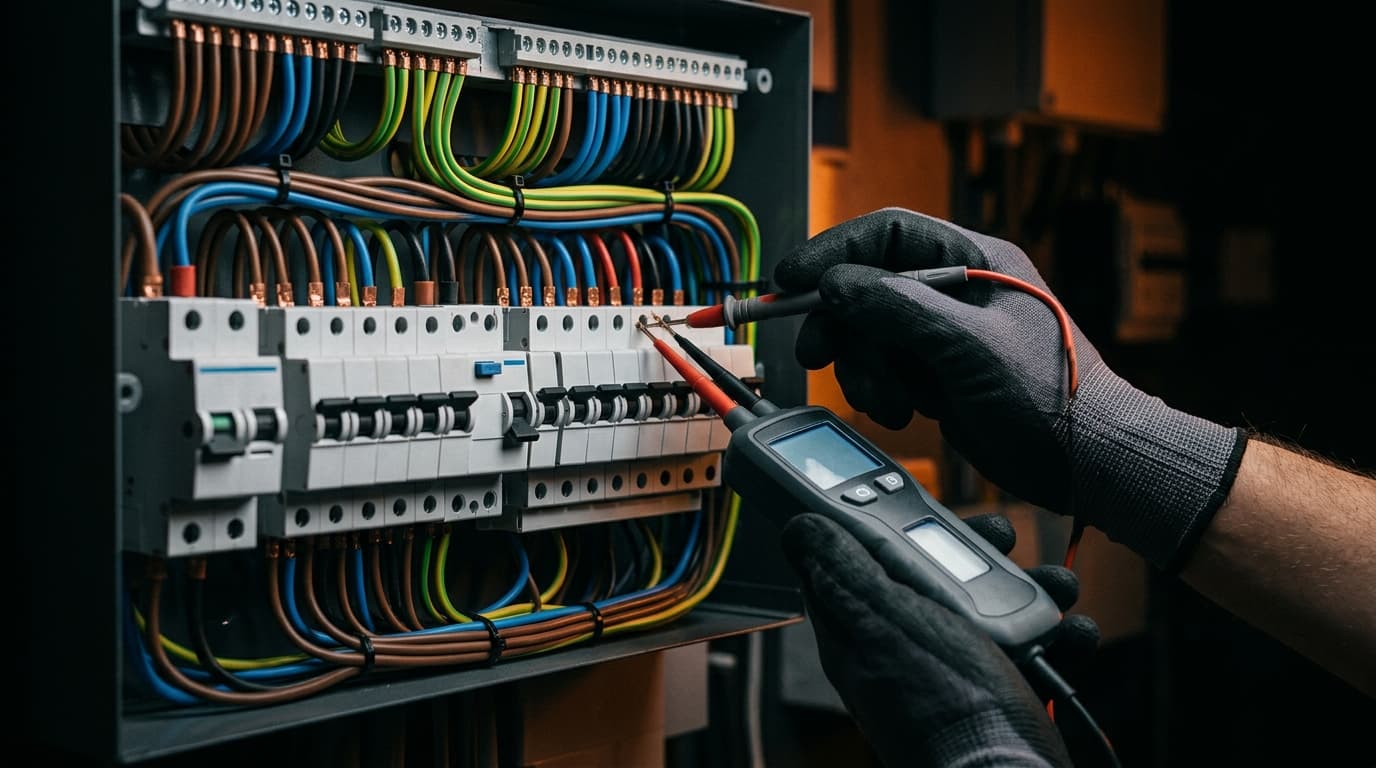
In Morocco, people often refer to the French standard NF C 15-100 as the reference for low-voltage electrical installations. Yet the official framework that applies in the kingdom is the Moroccan standard NM 17-1-01. The two texts share the same safety philosophy, but they are not the same thing. Understanding what brings them together and what sets them apart helps any homeowner or business make the right choices for a safe, durable installation.
What these standards govern in general
A low-voltage installation standard does not merely describe cables and sockets. It organizes the whole set of devices that protect people and property. The broad principles found in both references cover:
- Protection against electric shock: preventing any dangerous contact with live parts.
- Protection against fire: sizing conductors and protective devices to avoid abnormal heating.
- Earthing and grounding: connecting metallic parts to an effective earth electrode.
- Residual-current protection: detecting leakage currents with differential devices.
- Dedicated circuits: reserving independent lines for high-power appliances.
- The distribution board: centralizing and organizing protections in a legible way.
- Safety in wet rooms: bathrooms and kitchens, where water and electricity meet.
These themes form the common foundation. The difference lies mainly in how each country adapts these requirements to its own regulatory context.
How the Moroccan standard relates to the French reference
NM 17-1-01 belongs to the family of major international and European installation standards, of which NF C 15-100 is a well-known expression. Morocco built its national reference on that heritage while accounting for its own realities: the distribution network operated by ONEE, local construction habits, and climatic conditions.
In practical terms, the broad safety principles look alike, but the rules for connecting to the grid, the inspection procedures, and certain implementation requirements follow the Moroccan framework. You should therefore never assume that an installation compliant with a French text is automatically compliant in Morocco. For exact values and up-to-date requirements, only the official standard currently in force and the opinion of a qualified electrician can be relied upon.
Why compliance really matters
Achieving compliance is not an administrative formality. It is first a matter of human lives: a well-designed installation strongly reduces the risk of electrocution and domestic fire. Beyond safety, compliance has concrete consequences:
- Insurance: in the event of a claim, a non-compliant installation can complicate or even jeopardize compensation.
- Resale and rental: a home with a sound, documented installation inspires confidence and holds its value better.
- Grid connection: following the rules smooths the process with the electricity distributor.
Common mistakes in older installations
Many older Moroccan homes show recurring defects, often the result of work carried out over time without an overall plan. Among the most common:
- A missing or ineffective earth connection, which deprives the installation of its basic protection.
- The absence of high-sensitivity residual-current protection, even though a 30 mA device is now a recognized good practice.
- Overloaded circuits, with many appliances plugged into one line through power strips.
- An outdated distribution board, without clear labeling or suitable protections.
- A poorly protected bathroom, with sockets placed too close to water points.
These faults often go unnoticed as long as no incident occurs, which makes them particularly treacherous.
How to approach an upgrade
Modernizing an installation should not be left to chance. A sound approach follows a few logical steps:
- Have a full diagnosis carried out by a qualified professional, rather than treating symptoms one by one.
- Set safety priorities: earthing and residual-current protection come before comfort.
- Plan a clear distribution board, with dedicated circuits for large appliances.
- Document the work so you keep a file useful for insurance and any future resale.
The key word is guidance from a specialist: only they can measure your installation against the real, current requirements of NM 17-1-01.
In conclusion
NF C 15-100 and NM 17-1-01 share the same ambition for safety, but it is indeed the Moroccan standard that carries authority here. A compliant installation protects people, eases insurance, and adds value to the property. In the Taza region, SmartJar SARL delivers compliant electrical installations and supports individuals and businesses through their upgrades, drawing on the rules in force in Morocco.